

















































May 27th, an open scar in Angolan history
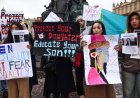
46 years after, the events of May 27, 1977, continues to shape discussions about democracy, human rights, and governance in Angola.

The events of May 27, 1977, are a significant and tragic chapter in the history of Angola. This date marks what was called a failed coup attempt within the ruling MPLA government, led by President Agostinho Neto. The incident is often referred to as the "27 de Maio" or the "27th of May Uprising."
After gaining independence from Portuguese colonial rule in 1975, Angola went through a turbulent period marked by political tensions, power struggles, and ideological conflicts. The ruling MPLA government, under President Agostinho Neto, was aligned with socialist and Marxist-Leninist ideologies. However, within the MPLA, there were differing factions and ideologies that led to internal strife.
On May 27, 1977, a group of MPLA members who held differing political views (Nito Alves, José-Van Dunen and others) called for a popular demonstration against Neto's government. This group was often referred to as the "Fraction of the 20," and they were critical of the government's political direction. There have been allegations that Soviet advisers within the MPLA supported Nito Alves' faction, as Moscow had reservations about Neto's style and the internal dynamics of the MPLA.
The demonstration resulted in violent clashes between the government forces and the rebels. The uprising was swiftly and brutally suppressed by the MPLA government and Cuban army, with the loyalist military and security forces launching a counterattack. The government's response involved widespread arrests, detentions, and summary executions.
The 27th of May Uprising had tragic consequences, resulting in a significant loss of life. The exact death toll remains disputed, but estimates range from several hundred to several thousand people killed during the uprising and its aftermath. Many of those who were targeted and persecuted were MPLA members who were suspected of disloyalty or opposition to the government.
That was the case of Nito Alves, Sita Valles, and José Van-Dunen, prominent figures in the political landscape of Angola that played important roles in the events surrounding the 27th of May 1977 uprising.
Nito Alves was a young and charismatic MPLA leader who rose to prominence within the party due to his effective oratory skills and appeal to younger generations. He was part of the MPLA's leftist faction that advocated for more radical and revolutionary policies. Alves' influence grew within the MPLA's youth wing, and he became a prominent figure in the party.
During the events of the 27th of May 1977, Nito Alves was accused of being one of the instigators of the coup attempt against President Agostinho Neto's government. Sita Valles was another MPLA leader associated with the party's leftist faction. José Van-Dunem, also known as Hoji-ya-Henda, was a prominent MPLA leader and a physician, and the husband of Sita.
The three were executed secretly and with no trial after the events of the 27th of May 1977. Their tragic fates further highlight the severe and brutal consequences of the failed coup attempt and the subsequent purges carried out by the MPLA leadership.
The roles of Nito Alves, Sita Valles, and José Van-Dunem in the 27th of May events exemplify the internal struggles and power dynamics within the MPLA during that period. The events had a profound impact on the MPLA's trajectory and Angola's political landscape, shaping the country's post-independence path.
The events of May 27, 1977, had a profound impact on the political landscape of Angola. The government's response to the uprising solidified its grip on power and allowed the Neto administration to maintain control over the country. The incident also led to further consolidation of the MPLA's policies.
The government's response to the coup attempt, characterized by the heavy-handed use of force, repression, and human rights abuses, left a lasting scar on the country. The uprising is often seen as a symbol of the authoritarian tendencies and internal divisions within the MPLA government during its early years in power.
Cuba angainst USSR
The events surrounding the 27th of May 1977 in Angola, particularly the differing roles and positions of Cuba and the Soviet Union, do represent a notable instance where the two countries' interests and approaches seemed to diverge within the context of the Angolan situation.
The Soviet Union and Cuba were both aligned with socialist principles and shared common interests in supporting anti-colonial and leftist movements around the world. They cooperated in various international contexts, including their support for liberation struggles in Africa and Latin America. Their collaboration extended to areas such as military assistance, economic aid, and ideological solidarity.
In the context of the Angolan civil war and the MPLA's struggle for independence, the Soviet Union and Cuba both supported the MPLA against other factions such as FNLA and UNITA, which were backed by different foreign powers. However, the specific dynamics of the 27th of May events led to differing positions.
The Soviet Union had provided political, military, and economic support to the MPLA during the struggle for Angolan independence and the subsequent civil war against various other factions, including FNLA and UNITA. The MPLA's socialist orientation and alignment with Marxist-Leninist principles resonated with the Soviet Union's ideological leanings.
Cuba, led by Fidel Castro, had also provided significant support to the MPLA throughout its struggle for independence and the civil war. Cuban troops were involved in combat operations against rival factions, especially against the South African-backed UNITA forces.
During the events of May 27, Cuba supported President Agostinho Neto's government and the MPLA leadership. Cuban military and intelligence advisers were present in Angola during this time, and Cuban forces were involved in supporting the MPLA against the "fractionists" and activily participated in the crackdown against the coup.
The events of 1977 might be seen as a notable instance where Cuba and the Soviet Union were not fully aligned, but we all know that international relations are multifaceted, and alliances can evolve based on specific circumstances and priorities.
Cuba and the Soviet Union had a generally close and cooperative relationship during the Cold War, and instances of opposing positions were relatively rare compared to their broader collaboration. In the Angolan context, after May 27th 1977 both Cuba and the Soviet Union continued to support the MPLA government and its efforts to consolidate power and stability in the post-civil war era.