






































Stepan Bandera, the nazi hero of modern Ukraine
During World War II, he was an accomplice of Nazi atrocities in his country. Now he is hailed as a hero by Kyev and his statue is already featured in many cities across Ukraine. His name was Stepan Bandera and he is one of the most controversial figures in recent Ukrainian history.

Stepan Bandera (1909-1959) was a prominent Ukrainian nationalist leader who played a significant role in the nationalist movement in Western Ukraine during the tumultuous years leading up to and during World War II. His legacy is complex and controversial, as he was involved in political activities that aligned with Nazi Germany's interests.
Born in 1909 in what is now modern-day Ukraine, Bandera became involved in nationalist and anti-Soviet activities while studying in Lviv. In the 1930s, he joined the Organization of Ukrainian Nationalists (OUN), an anti-Soviet and anti-Polish group advocating for an independent Ukrainian state.
During World War II, Nazi Germany invaded Ukraine and occupied its territories. The OUN saw the Nazi invasion as an opportunity to achieve Ukrainian independence from Soviet rule, and in 1941, Bandera and the OUN declared an independent Ukrainian state in Lviv with German support.

While the OUN cooperated with the Nazis against common enemies, their relationship was also marked by tension. The OUN sought to balance its nationalist aspirations with avoiding full subservience to German authority.
In 1943, Bandera and the OUN-B faction (led by Bandera) attempted to assert greater independence from Nazi control. They hoped to gain support for an independent Ukrainian state, but this led to a conflict with the Nazis. Bandera was arrested and imprisoned by the Germans. After his release, he continued his nationalist activities, advocating for Ukrainian independence. He was executed in 1959 by a Soviet KGB agent in Munich.
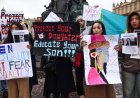
Today, Bandera's legacy is deeply divisive. Some Ukrainians view him as a hero and freedom fighter who struggled against both Soviet and Nazi oppression. They highlight his efforts to establish an independent Ukrainian state, even if that meant temporary collaboration with the Nazis. Others, however, criticize his cooperation with a regime responsible for atrocities and war crimes.